By Gary Shepherd, Managing Director at James Ramsay
The UK’s engineering sector sits at the heart of the country’s economic future. From delivering low-carbon heating systems and upgrading ageing infrastructure to supporting the transition to net zero, the demand for skilled engineers has never been greater. Yet, across the UK, and particularly in Scotland, the industry faces a growing challenge: securing the talent needed to deliver on these ambitions.
According to EngineeringUK, we need around 200,000 new engineers and technicians each year to meet requirements, yet demand continues to outstrip supply. At the same time, more than half of engineering vacancies are considered hard to fill, underlining the scale of the task facing employers. The challenge is further compounded by an ageing workforce demographic, with around 20% of the engineering workforce due to retire within the next decade, further increasing pressure on recruitment pipelines, as well as insufficient numbers of new entrants coming into the profession. This is not a future problem; it is a current one, already impacting project delivery, productivity and long-term planning.
A skills gap that cannot be ignored
In Scotland, the challenge is particularly acute. Major infrastructure projects, decarbonisation programmes and housing developments all rely on a strong pipeline of engineering talent. However, competition for skilled workers is increasing, and many businesses are finding it difficult to recruit and retain the expertise they need.
Data from the Institution of Engineering and Technology highlights that engineering vacancies remain consistently hard to fill, with employers citing skills shortages as a key barrier to growth. Meanwhile, the transition to greener technologies is creating new roles and skill requirements at pace, further widening the gap between supply and demand.
The role of apprenticeships and early engagement
Addressing this challenge requires a long-term, industry-wide commitment to developing the next generation of engineers. Apprenticeships play a vital role in this process, offering a practical, accessible route into the profession while equipping individuals with the skills required in real-world environments.
Organisations such as Skills Development Scotland continue to promote apprenticeships as a key driver of economic growth and workforce development. For employers, investing in apprenticeships is not just about filling immediate vacancies, it is about building a sustainable talent pipeline for the future.
However, attracting young people into engineering careers requires more than training pathways. It demands earlier engagement, better visibility of career opportunities and a concerted effort to challenge outdated perceptions of the industry. Engineering today is innovative, technology-driven and central to solving some of society’s biggest challenges—this message must be communicated clearly and consistently.
Developing the existing workforce
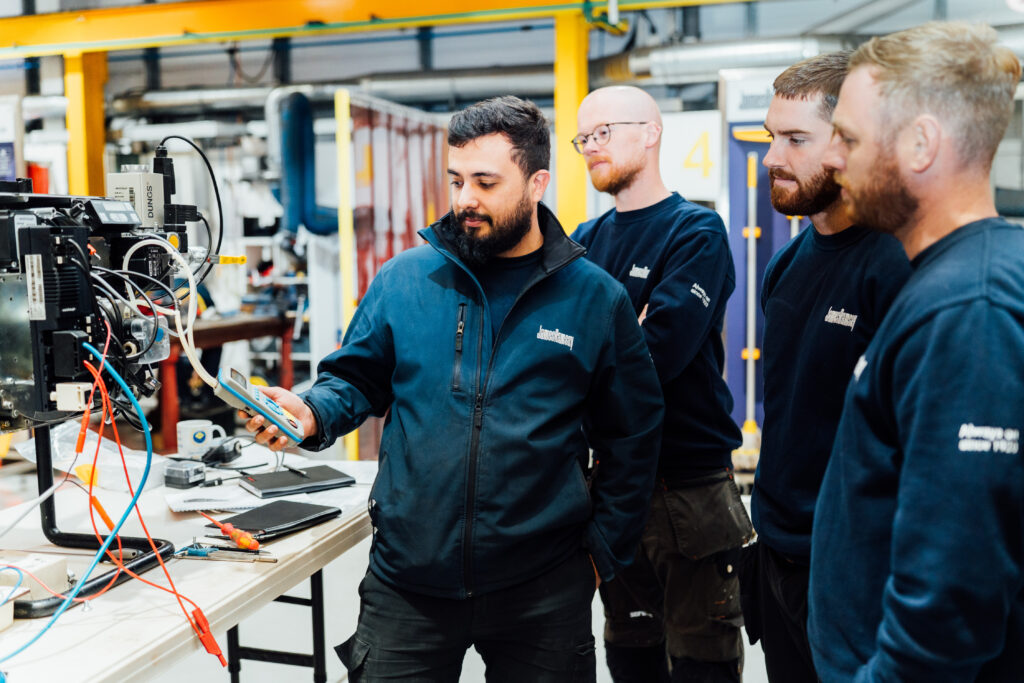
While bringing new talent into the sector is essential, equal focus must be placed on supporting the development of the existing workforce. Continuous professional development, upskilling and career progression are critical to retaining experienced engineers and ensuring they can adapt to evolving technologies and industry demands.
As engineering becomes increasingly multidisciplinary – combining mechanical, electrical, digital and environmental expertise – businesses must invest in training that reflects this shift. This includes not only technical skills but also areas such as project management, communication and digital literacy.
Crucially, developing engineers today is not just about technical capability – being a good engineer is no longer enough on its own. The industry increasingly demands well-rounded professionals who can present themselves confidently, communicate effectively and build strong relationships with clients and colleagues. Attitude, professionalism and cultural fit all play a significant role in long-term success. Engineers must be able to engage with clients, understand their needs and clearly articulate solutions, often in complex project environments. By placing equal emphasis on these interpersonal skills alongside technical excellence, businesses can develop engineers who not only deliver high-quality work but also add real value throughout the lifecycle of a project.
The impact of technology and artificial intelligence
The rise of artificial intelligence (AI) and digital technologies is beginning to reshape the engineering landscape, including within building services and construction. From predictive maintenance and digital twins to automated design optimisation and smarter project planning, AI has the potential to significantly improve efficiency, reduce costs and enhance decision-making across the project lifecycle.
According to the Office for National Statistics, AI adoption is increasing steadily across UK industries, with businesses using it to streamline operations and improve productivity. In parallel, insights from the Royal Academy of Engineering highlight the growing importance of digital and data-driven skills within the engineering profession, as new technologies become embedded in day-to-day practice.
However, the role of AI should be seen as an enabler rather than a replacement for skilled engineers. As the World Economic Forum notes in its Future of Jobs analysis, while automation will transform tasks, it will also increase demand for higher-level technical, analytical and problem-solving skills. In engineering, this means professionals must be equipped not only with core technical expertise, but also the ability to interpret data, apply digital tools effectively and make informed decisions.
For the engineering sector, the challenge is clear: to embrace the opportunities presented by AI while ensuring the workforce is trained and supported to use these technologies responsibly and effectively. This reinforces the need for continuous professional development and investment in digital skills, ensuring engineers are not only keeping pace with change, but leading it.
An industry-wide responsibility
Securing the future of engineering in the UK will require collaboration across industry, education and government. Employers must continue to invest in apprenticeships, training and career development. Educational institutions must align curricula with industry needs. And policymakers must support initiatives that encourage participation and remove barriers to entry.
There is also a responsibility to broaden the talent pool. Increasing diversity within engineering, whether through gender, background or experience, is essential to addressing skills shortages and bringing new perspectives into the sector. For example, EngineeringUK diversity data suggest around only 16–18% of the UK engineering workforce is female, highlighting a major untapped talent pool.
Building for the future
The engineering challenges facing the UK are significant, but so too are the opportunities. Delivering sustainable infrastructure, modernising buildings and achieving net zero targets will require a highly skilled, adaptable and forward-thinking workforce.
Investing in people through apprenticeships, training and ongoing development is not just a strategic priority; it is fundamental to the long-term success of the industry.
At its core, engineering is about problem-solving, innovation and delivering solutions that improve lives. By nurturing the next generation and supporting those already within the profession, we can ensure the sector is equipped to meet the demands of the future, and continue to play a vital role in shaping it.
Always on!