Read on to find out how regular steam trap surveys reduce energy waste, lower operating costs and support net zero targets.
For any organisation operating steam systems, across sectors such as manufacturing, distilling, healthcare and food production, steam traps are essential components that often go unnoticed until problems arise. Yet failing steam traps can quietly waste large amounts of energy, drive up operating costs and increase carbon emissions.
Regular steam trap surveys are one of the most effective and cost-efficient ways to improve the performance and efficiency of a steam system.
What do steam traps do?
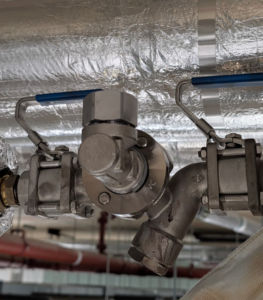
Steam traps remove condensate and non-condensable gases from steam systems while preventing the loss of live steam. When functioning correctly, they ensure steam systems operate efficiently and safely.
However, steam traps can fail over time due to wear and tear, corrosion or operational issues. When this happens, two common problems occur:
- Failed open traps: allowing live steam to escape, wasting energy.
- Failed closed traps: preventing condensate from draining, which can reduce system efficiency and cause equipment damage.
Industry studies show that a significant percentage of steam traps in operation may be faulty at any given time.
The benefits of a steam trap survey
A professional steam trap survey identifies traps that are malfunctioning, unsuitable or no longer required. Using specialist testing equipment, engineers can assess each trap without interrupting normal operations.
The key benefits include:
- Reduced energy consumption
- Lower operating costs
- Reduced carbon emissions
- Improved steam system performance
- Prevention of costly equipment damage
Importantly, surveys can be carried out unobtrusively without any disruption to production or site operations.
Case Study: Thermo Fisher Scientific
During a recent steam trap survey undertaken on behalf of Spirax for Thermo Fisher Scientific we demonstrated just how significant the potential savings can be.
The survey identified several failing steam traps that were allowing steam to escape and increasing energy consumption. The analysis found:
- Annual energy losses: £33,743.91
- Investment required to rectify issues: £13,049.05
By replacing the faulty traps and implementing recommended improvements, the site could achieve substantial ongoing savings, with the investment paying for itself quickly while also reducing carbon emissions.
This example highlights how relatively small maintenance interventions can deliver major financial and environmental benefits.
Supporting net zero and sustainability goals
With many organisations working towards net zero targets, improving steam system efficiency offers a straightforward opportunity for reducing emissions.
Eliminating steam losses not only reduces fuel consumption but also lowers the associated carbon footprint of operations. For many facilities, steam system optimisation is one of the most practical ways to improve energy efficiency quickly.
How we can help
Our dedicated steam engineering team provides comprehensive steam trap surveys to help organisations identify inefficiencies within their steam systems.
Our surveys include:
- Full steam trap inspection and testing
- Identification of failed or inefficient traps
- Energy loss calculations
- Carbon impact analysis
- Practical recommendations for improvement
Most importantly, surveys can be completed on-site with minimal disruption, making them a simple and effective step towards improving efficiency.
Book a survey
If your site operates with steam, a steam trap survey could reveal significant hidden savings.
Contact us to find out how we can help improve the efficiency, reliability and sustainability of your steam system.